
Explainer
Whole-Child Wellness
The conditions kids need in order to learn.
- Page status
- Published
- Last updated
- 2026-09-09
- Sources
The question I started with
“Are our kids getting enough movement, support, and time away from screens?”
Why I'm the one asking this
In the middle of the pandemic, I worked at a company building one of the largest clinical-grade mental health platforms in the country. I watched the data come in in real time.
Appointment requests. Crisis contacts. And signals tied to suicidal ideation going off with a frequency that was impossible to ignore.
What stayed with me was who was showing up: school-age kids, in huge numbers, and adults 65 and older right alongside them. You could see, in the data, what isolation and disruption were doing to people.
I lived a much smaller version of it myself.
For two years, I moved from one Zoom call to the next. I was talking to people all day, but building real relationships felt much harder than I expected. In person, you read a room without thinking about it. You notice hesitation, humor, warmth, discomfort. Over video, all of that took more effort.
I could spend an entire day with people and still end it feeling strangely disconnected.
What helped me feel like myself again was movement. Walking calls. Yoga. Standing while I worked. Some of my clearest thinking happened on my feet, not in a chair.
That experience has stayed with me because I never want to look back at another generation of children and realize we saw the warning signs but failed to respond.
Schools cannot solve every problem in a child's life. But they can make sure we are doing right by kids while they are with us.
That means asking more than whether test scores are okay.
- Are kids moving enough?
- Are they building real relationships?
- Do they have time to play, create, talk and think?
- Are we giving them enough time away from screens to actually experience the world around them?
Those things are not extras. They are part of what helps children feel well, connected and ready to learn.
What the state actually requires

Counselor staffing. California sets no required counselor-to-student ratio. The American School Counselor Association recommends one counselor per 250 students, but that is a professional guideline, not a state mandate. Staffing levels are set locally by each district's governing board as part of its annual budget.

Library staffing. State law does not require public schools to staff a librarian holding a Teacher Librarian Services Credential. Absent a state mandate, school libraries are staffed at each district's discretion — some districts employ credentialed librarians, others use aides, volunteers, or classroom teachers, and some campuses have no dedicated library staff. A staffed library is one of the few dedicated, screen-free spaces a student has access to during the school day — which is part of why staffing levels matter here, not just for reading support.
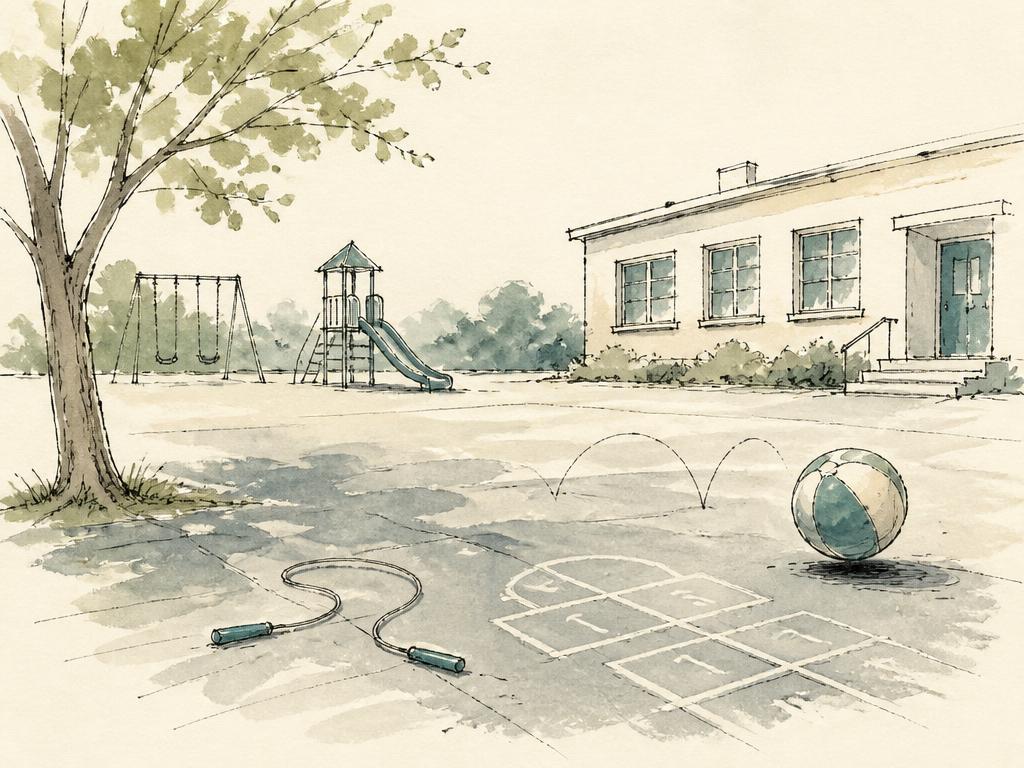
Recess & PE. State law sets firm minimums here. Under SB 291 (2024), elementary schools must provide students at least 30 minutes of recess per school day. Separately, Education Code Section 51210 requires elementary schools to provide at least 200 minutes of physical education instruction per 10 school days. Both are statewide requirements that apply to every district.

Screen time. Under the Phone-Free Schools Act (AB 3216, 2024), every California school district was required to adopt and enforce a policy limiting student smartphone use during the school day by July 1, 2026 — a deadline that has now passed. State law set the deadline and the requirement to have a policy; the specific rules were left to each district.
What WCSD is already doing
Social-emotional learning. In June 2021, the WCSD board adopted district-wide Social and Emotional Learning standards. Every school now runs a Wellness Center — a quiet space students can use during the day — and SEL support is built into the district's tiered system of student supports. Source: WCSD SEL Standards
Child nutrition. WCSD's Child Nutrition program recently earned gold-tier certification from Eat Real, a national standard for serving nutritious, minimally processed, locally sourced meals. Every WCSD student — regardless of income — gets one free breakfast and one free lunch daily. Source: WCSD Child Nutrition Program
Sources
- California Department of Education — counselor and staff ratio data
- Commission on Teacher Credentialing — Teacher-Librarian Services Credential
- SB 291 (2024) — California's statewide recess law, and KPBS's coverage of it
- California Education Code Section 51210 — elementary physical education minutes
- Phone-Free Schools Act (AB 3216) — district smartphone policy deadline
- Bailenson, “Nonverbal Overload” (Technology, Mind & Behavior, 2021) — research on video-call fatigue and reduced nonverbal cues
What could change?
No page on this site promises outcomes that depend on future funding, district staff, collective board decisions, or circumstances that cannot yet be known. Here is what would remain undecided — and who would decide it.
Decisions that remain with the board
- Staffing levels for counselors and support staff are annual budget decisions
Delegated to district administration
- Recess, movement, and screen-time practices are set and supervised by district and school administration
Depends on teachers & school staff
- What happens in each classroom depends on teachers and site staff
Funding assumptions
- Counselor and support staffing depend on available funding each year
Enrollment assumptions
- Ratios shift as enrollment changes, even when staffing stays flat
State & federal dependencies
- Some student-support positions rely on state or federal grants with their own timelines and conditions
Known risks
Not yet assessed
Questions still unanswered
- What are counselor and support-staff ratios across district schools?